
My Books Are Still in My Bag
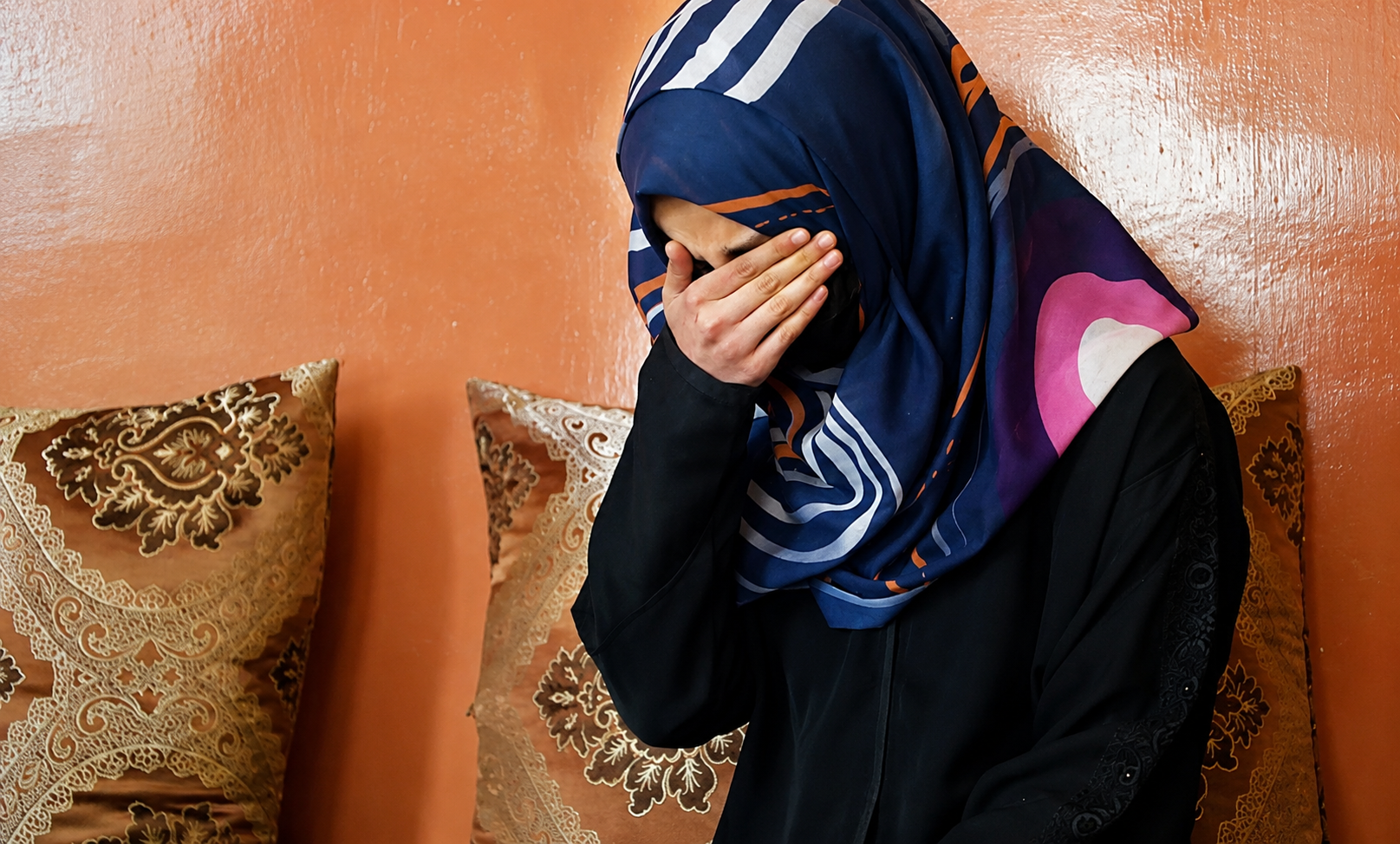
Mariam’s Story
A Banoo Foundation Story of Interrupted Education, Ambitaon, and Hope
There are moments when a future that took years to imagine can be changed by a single decision. For Mariam, that moment came when women were barred from attending university in Afghanistan.
Mariam was 23 years old and in her first semester of Computer Science. She had only just begun university, but she already knew what she wanted to build from it: a career in technology and a future as a software engineer.
University was more than a place to attend classes. It was proof that the years she had spent studying and preparing were leading somewhere. There were assignments to finish, unfamiliar subjects to master, skills to develop, and a life beyond graduation that was beginning to feel real.
She imagined herself writing code, solving problems, creating technology, and earning a place in an industry shaped by ideas and innovation. She wanted the independence that comes from education and the freedom to choose what her own future could look like.
Then the university doors closed to her.
Mariam was forced to leave her studies behind, not because she had failed, lost interest, or lacked ability, but because she was a woman. The classroom she had worked so hard to enter suddenly became a place she was no longer permitted to go.
At first, it was difficult to accept. She had spent years preparing for higher education, only to have that opportunity taken away just as it had begun. Instead of planning for exams, new courses, and graduation, she was left with a question she could not answer: when – or whether – would she be allowed to return?
But Mariam has not put her university life completely away.
“I put my books in my bag. Maybe one day I can get a chance to go to university again.”
She still keeps her university books. Sometimes she places them carefully into her bag, almost as though she is preparing for class again. It is a small act, but for Mariam it carries the weight of an unfinished future.
Those books are no longer only textbooks. They are evidence of what she began, what was taken from her, and what she still hopes to complete. Keeping them close is her way of refusing to treat her education as something that belongs only to the past.
Mariam still thinks about the career she chose. She can still picture herself as a software engineer – writing code, developing solutions, learning new technologies, and using her skills to create something meaningful. The ban changed her circumstances, but it did not erase her ambition.
Today, however, the questions that should occupy a university student have been replaced by much harder ones. Instead of asking which course she will take next semester, Mariam wonders when she will be allowed to study again. Instead of planning for graduation, she waits for the chance to return to the education she had already earned the right to pursue.
Her story is shared by countless Afghan women whose studies in medicine, law, engineering, computer science, education, and other fields were interrupted. Their ambitions were different, but the barrier placed in front of them was the same.
For Mariam, that is one of the most painful truths: she was not excluded because she was unable to learn. She was excluded because she is a woman.
Behind every statistic about women denied higher education is a person like Mariam – someone with books, unfinished assignments, years of preparation, a family, a career she imagined, and a future she was actively working to build.
Her message to the international community is not a request for pity. It is a request not to look away.
“Do not forget Afghan women and girls. Do not let our education and our dreams disappear in silence. Help us have the opportunity to return to university and build the futures we worked so hard for.”
Mariam does not want sympathy alone. She wants an opportunity – the opportunity to learn, to finish what she started, to work, and to decide the direction of her own life.
She wants to open her university books because she is preparing for class, not because she is trying to hold on to a life that was interrupted. She wants to sit in a Computer Science classroom again. She wants to complete her degree. She wants to become a software engineer.
Most of all, she wants something that should never have been taken from her: the right to shape her own future.
For now, her books remain in her bag.
She keeps them there because hope, like education itself, can be an act of resistance. Every book she holds on to is a reminder that her story is not finished, that her ambition still belongs to her, and that a closed university door does not erase the life she is still determined to build.
One day, Mariam hopes she will carry that same bag back through a university gate – not as a visitor, and not as someone asking for permission to dream, but as a student returning to the future she was forced to leave behind.
Mariam’s Story | Banoo Foundation
Documenting the voices, rights, and resilience of Afghan women and girls.